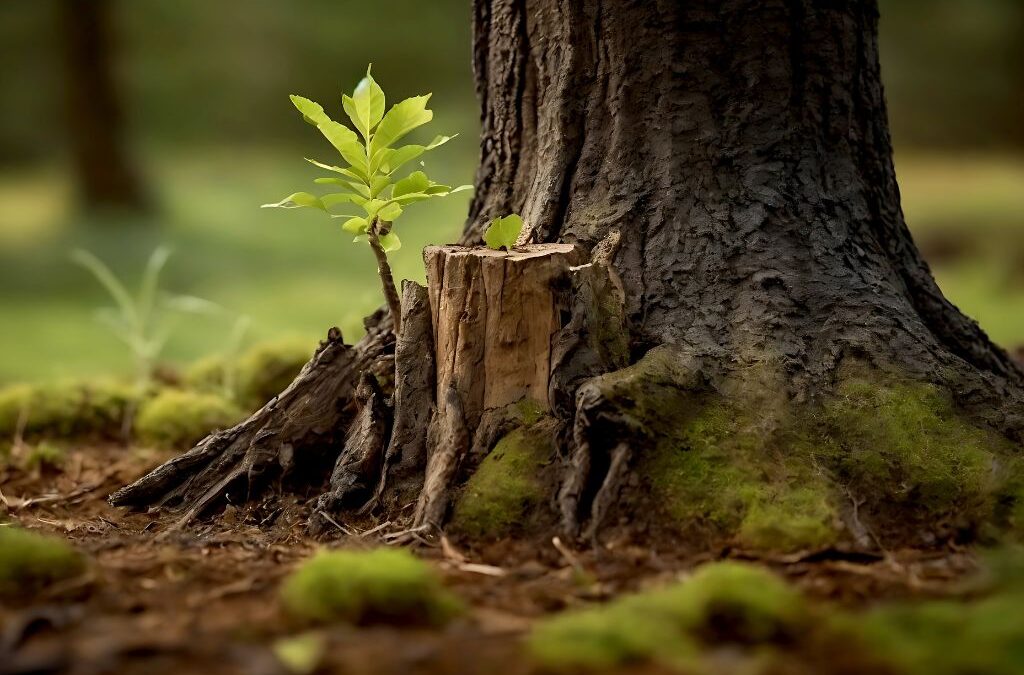
If you’ve found this blog, you probably already know the frustration. Knowing how to stop tree roots from growing back is one of those things that seems like it should be simple – the tree is gone, after all, and so is the stump. Job done … or so you thought. But you found yourself standing in the backyard six months later watching shoots push up through the lawn where the tree used to be – or you discovered that the roots under your driveway are still very much alive and moving.
Truth is, trees are exceptionally good at surviving. Their root systems are designed to outlast almost everything you throw at them – and without the right approach at the right time, regrowth is not just possible, it’s likely.
Why did you want those tree roots gone for good?:
- Maybe a large tree came down in a storm and the stump was ground out, but now new growth keeps appearing.
- Maybe you had a tree removed near your pool or your sewer line, or even your foundations, and you need to be certain the roots aren’t continuing to push and probe underground.
- Maybe you removed a palm that was dropping fronds into your neighbour’s yard, and you’d rather not have a conversation about it again.
Whatever brought you here, the problem is the same – the roots are either already back, or you want to make sure they never will be.
Why do roots regrow, anyway?
Understanding why roots regrow in the first place helps.
When a tree is cut, the root system doesn’t immediately die. It still contains stored energy – carbohydrates – and in many species, that energy drives the production of new shoots from the stump or from roots beneath the surface.
Some species are significantly more aggressive about this than others, like:
- Brush box
- Camphor laurel
- Figs.
But many other species will also resprout vigorously if given the chance. Others, including most palms, don’t reshoot from cut stumps at all – but their root systems can still cause structural problems long after the tree is gone if they’re left in place.
So what actually works? Let’s run through the Big 5:
1. Full stump grinding
Stump grinding is the most reliable first step in preventing regrowth.
A stump grinder removes the stump and the upper root system to below ground level – typically 200 to 300mm deep – eliminating the main energy reserve the tree would draw on to resprout.
For most species, a properly ground stump combined with one of the treatments below is sufficient to prevent any meaningful regrowth.
It’s worth noting that stump grinding alone isn’t always the complete answer. The lateral roots extending away from the stump are left in the ground and will decay over time, but in some species those lateral roots can still produce suckers if the stump itself isn’t treated after grinding.
2. Herbicide treatment
Applied correctly and at the right time, herbicides are one of the most effective tools for ensuring tree roots removal is permanent.
The most reliable method is the cut stump treatment – applying a concentrated herbicide such as glyphosate or triclopyr directly to the freshly cut surface of the stump immediately after cutting, before the tree has time to seal the wound. The chemical is drawn down into the root system through the same vascular tissue that once carried water and nutrients through the tree.
Timing matters enormously here. The window between cutting and treatment is short – ideally within minutes, certainly within an hour. A treatment applied to a stump that has begun to dry or seal will be far less effective.
This is one of the key reasons professional arborists achieve better results with herbicide treatment than DIY attempts – they apply it as part of the removal process rather than as an afterthought.
3. Drill & fill treatment
For stumps that are already in the ground – either because the tree was cut some time ago or because grinding isn’t feasible in the space – the drill and fill method introduces herbicide directly into the root system.
Holes are drilled into the stump at regular intervals around the outer edge, and concentrated herbicide is poured into each hole and sealed. This gets the chemical into the vascular system without requiring a fresh cut surface.
It’s slower than cut stump treatment and requires patience – results aren’t immediate – but it’s effective on most species and practical in situations where access is limited.
4. Rock salt application
Rock salt is a low-chemical option that works by drawing moisture out of tree roots and disrupting the roots’ ability to absorb water and nutrients. It’s most commonly used on surface tree roots or around stumps where chemical herbicide use is a concern, near:
- Vegetable gardens
- Water features
- Areas with other desirable plants nearby.
It works … but slowly. It also affects soil chemistry in ways that can inhibit other plant growth in the treated area for some time. It’s better suited to situations where you want a gradual, low-intervention approach rather than a fast result.
5. Root barriers
Where the goal is preventing existing living tree roots from encroaching further – rather than killing them outright – physical root barriers are the appropriate solution.
High-density polyethylene barriers are installed vertically in the soil to redirect root growth away from structures, pipes, or paving. They don’t kill the tree or its roots; they redirect them.
This approach is most relevant when dealing with a tree you want to keep, but whose roots are heading somewhere problematic. It’s also used when replanting in an area previously occupied by a removed tree, to prevent new root systems from following the same paths as the old ones.
What about palm tree roots?
Before we finish up, it’s well worth addressing that palm tree roots behave differently to most other species.
Unlike broadleaf trees, palms don’t resprout from a cut stump – once the growing tip is removed, the palm is dead. However, palm tree roots themselves are fibrous, numerous, and can extend a significant distance from the base. They don’t thicken over time the way other tree roots do, but they can persist in the soil for years and cause issues with drainage and lawn growth.
Stump grinding combined with root removal where accessible is the standard approach for palms.
When to call an arborist
Knowing how to kill tree roots effectively – and permanently – depends pretty much entirely on:
- The species
- The size of the root system
- The proximity to structures or services.
Getting it wrong means doing it twice! Here at JC Tree Services, our certified arborists can assess your specific situation and recommend exactly the right approach – and then carry out the work with the equipment and expertise to get a lasting result.
Get in touch for your free quote today.