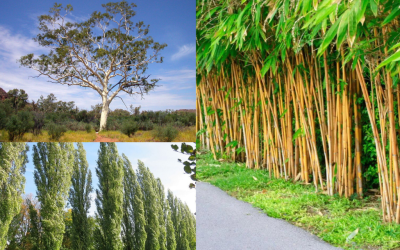
Choosing the right tree for your yard sounds straightforward … until you’re staring at a cracked driveway some years later. The wrong tree can also clog up your sewer lines, or lift your pool, leaving you wondering how on earth it all came to this. Truth be told, the trees with non invasive roots Australia gardeners and local arborists recommend aren’t just a safer choice – they’re the difference between a yard that stays beautiful and one that quietly becomes a liability.
And on the Gold Coast, it matters here more than most places. And why? Because our famous subtropical climate pushes tree growth extremely hard. A tree that might take 20 years to cause problems in a cooler climate can do the same damage in half that time here. Roots follow moisture – and in SEQ that means they’ll find:
- Your irrigation lines
- Your stormwater pipes
- And the edge of your slab.
And it will all happen before you’ve noticed anything at all above ground. By the time there’s visible damage, the roots have usually been working for years.
Getting the tree selection right from the start is exactly the kind of advice a qualified arborist can give you. It’s also the kind of mistake they spend a lot of time cleaning up.
The top 5 trees for Gold Coast yards
Not every tree belongs in every yard – and on the Gold Coast the stakes are higher than most. These 5 have been hand-picked because they:
- Handle the climate
- Stay within their boundaries
- Give you something worth looking at while they’re at it.
Let’s dive in:
1. Tuckeroo (Cupaniopsis anacardioides)
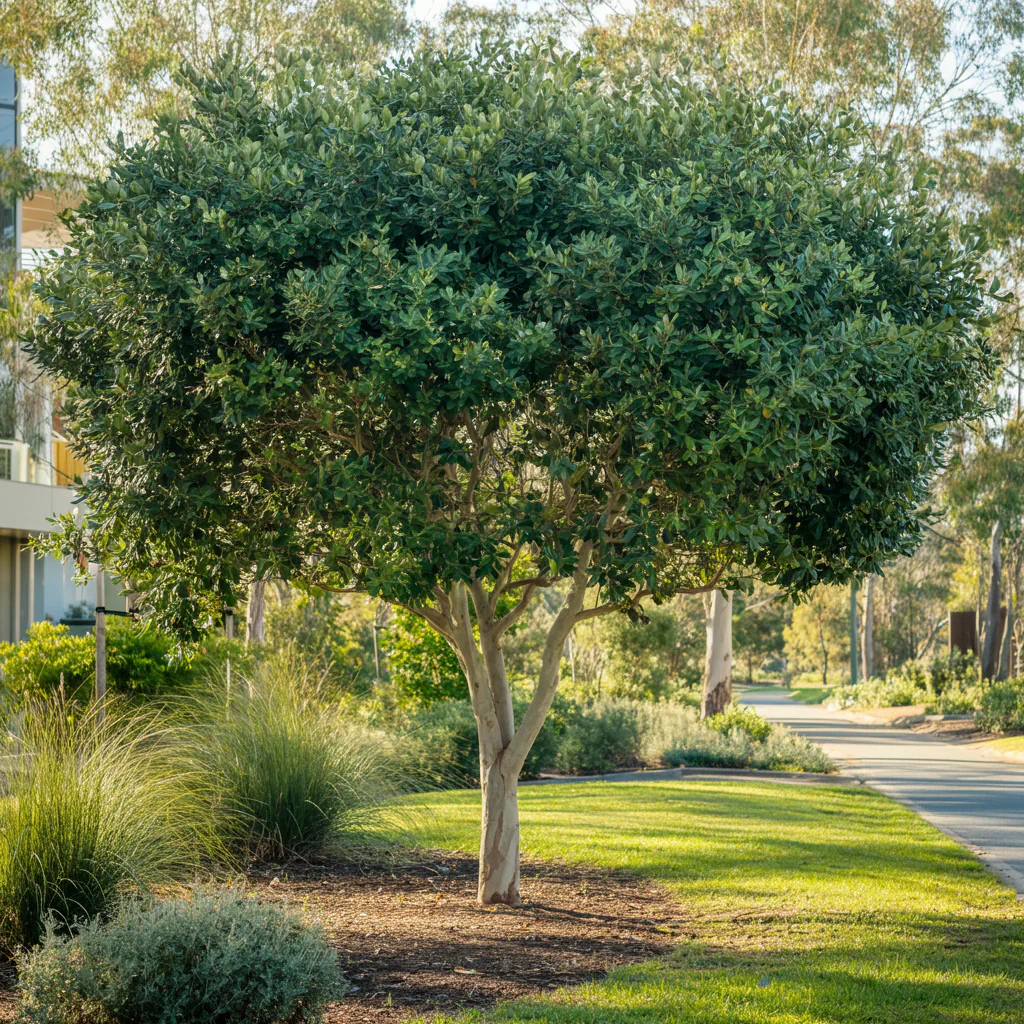
If there’s one tree that feels tailor-made for the Gold Coast suburban yard, it’s the Tuckeroo.
It’s:
- Native to coastal SEQ
- Handles the heat and humidity without fuss
- Tops out at around 5-8 metres – manageable without being underwhelming.
The canopy is dense and rounded, it drops minimal leaf litter, and the roots stay where they’re put. Birds go after the small orange berries in spring, which is a bonus if you like a bit of life in the garden. It also works as a standalone feature, a driveway border, or trimmed into a screen along a fence line for privacy.
2. Lemon Myrtle (Backhousia citriodora)
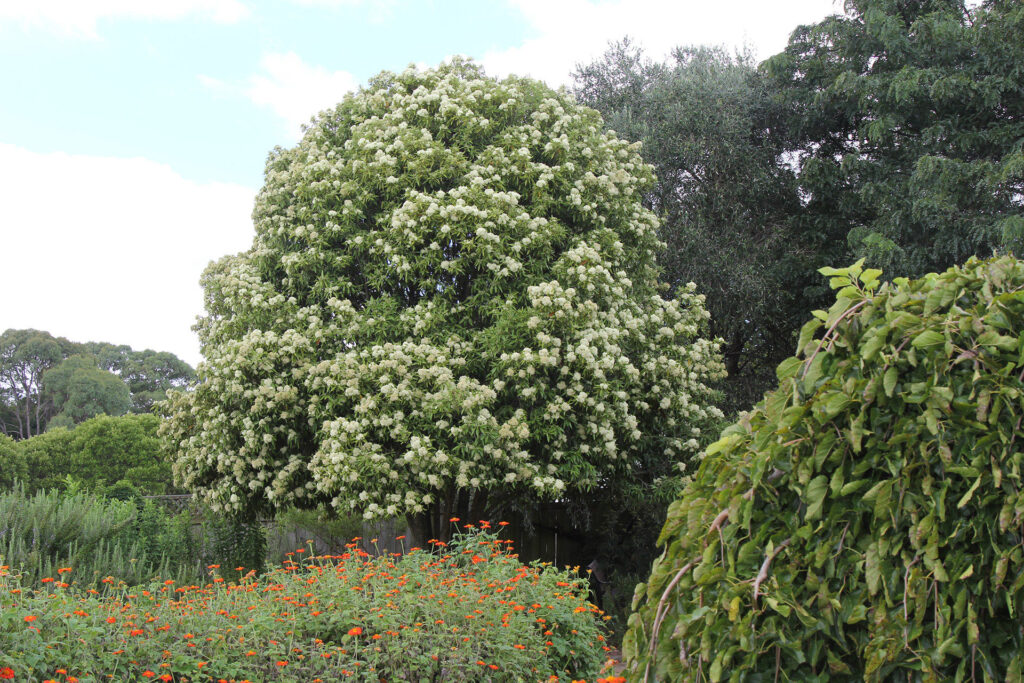
Among the small trees with non invasive roots worth planting close to structures, Lemon Myrtle is one of the best.
It’s:
- Slender
- Native to Queensland
- Won’t bully its way under your footings.
It grows to around 5-6 metres and has that distinctive aromatic foliage that releases scent when brushed – and produces fluffy white flowers that native bees and insects love.
It’s a good choice for a side boundary or a tight space near the house where you want greenery without the risk.
Other small options worth considering:
- Native Gardenia (Randia fitzalanii): Fragrant, compact, suited to SEQ conditions.
- Blueberry Ash (Elaeocarpus reticulatus): Delicate flowers, manageable size, non-invasive.
- Magnolia ‘Little Gem’: Evergreen, tidy, popular in suburban Gold Coast gardens.
3. Weeping Lilly Pilly (Waterhousia floribunda)
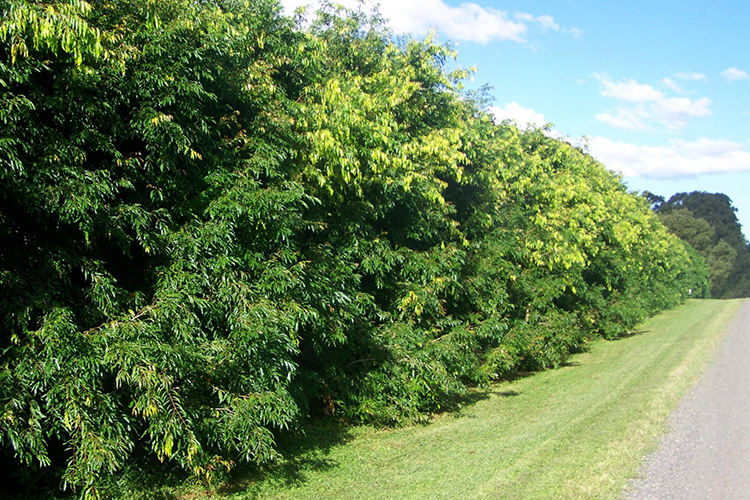
For anyone after evergreen trees with non invasive roots in Australia that actually do something useful – like providing shade or screening, all whilst looking good at the same time – the Weeping Lilly Pilly is hard to beat.
It grows to around 10 metres but takes well to pruning, which lets you control the spread. The cascading foliage is soft and dense, it handles the Gold Coast climate easily, and the root system stays contained.
It’s a popular choice near pools and patios for exactly that reason.
Other evergreen options:
- Native Frangipani (Hymenosporum flavum): Fragrant, slender, east coast native.
- Australian Willow (Geijera parviflora): Upright, graceful, reliable in most soils.
- Ivory Curl Tree (Buckinghamia celsissima): Stunning late summer flowers, neat form.
4. Illawarra Flame Tree (Brachychiton acerifolius)
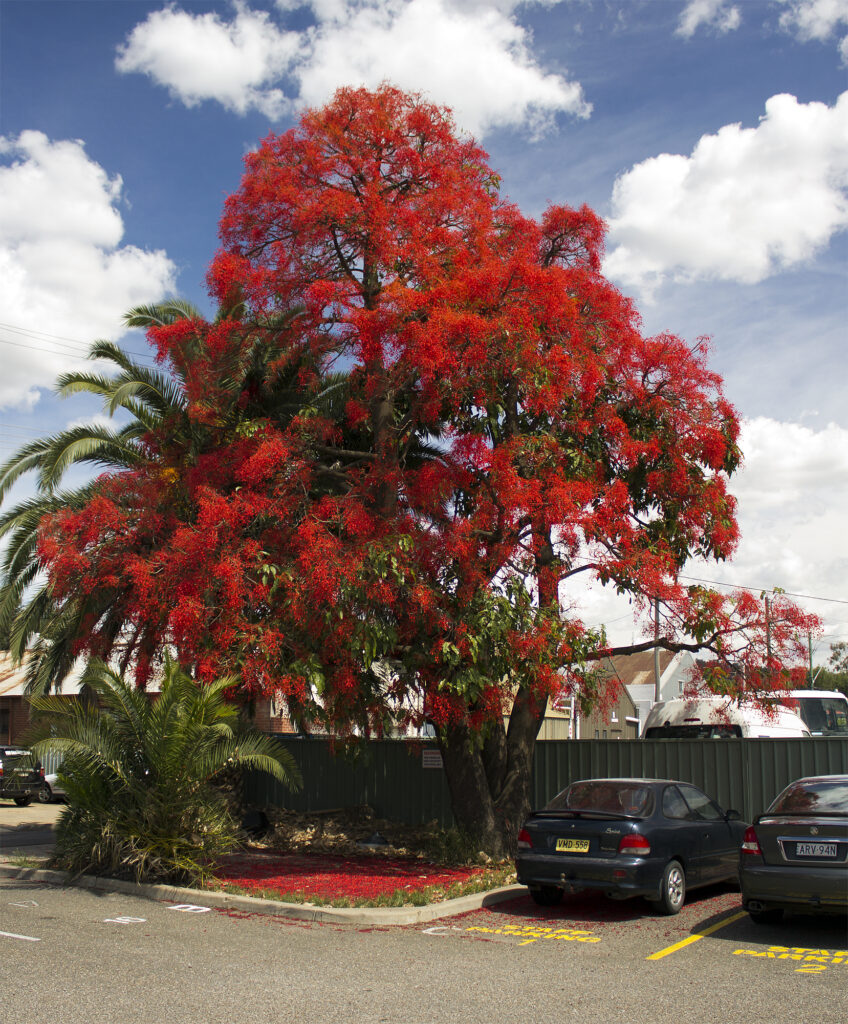
The Illawarra Flame Tree earns its spot on any list of large trees with non invasive roots in Australia because of spectacle alone – but it’s also genuinely practical.
- It grows to around 12-15 metres
- The canopy is broad and providing
- In a good year the flowering display – fiery red across bare branches before the new leaves come – is one of the best of any Australian native.
As one of the native trees with non invasive roots, it also supports local wildlife – with nectar-feeding birds drawn to the flowers. It needs space to perform, so it suits a back corner or a large open yard rather than a tight suburban block.
Other large canopy options:
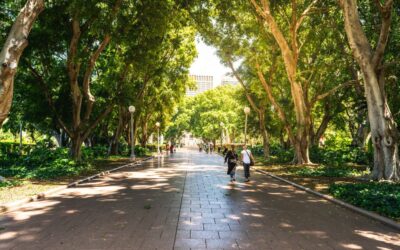
- Queensland Brush Box (Lophostemon confertus): Tough, pollution-tolerant, and among the stand-out shade trees with non invasive roots Australia just loves.
- Tuckeroo (at scale): Planted in multiples, it creates a generous canopy along boundaries.
5. Crepe Myrtle (Lagerstroemia indica)
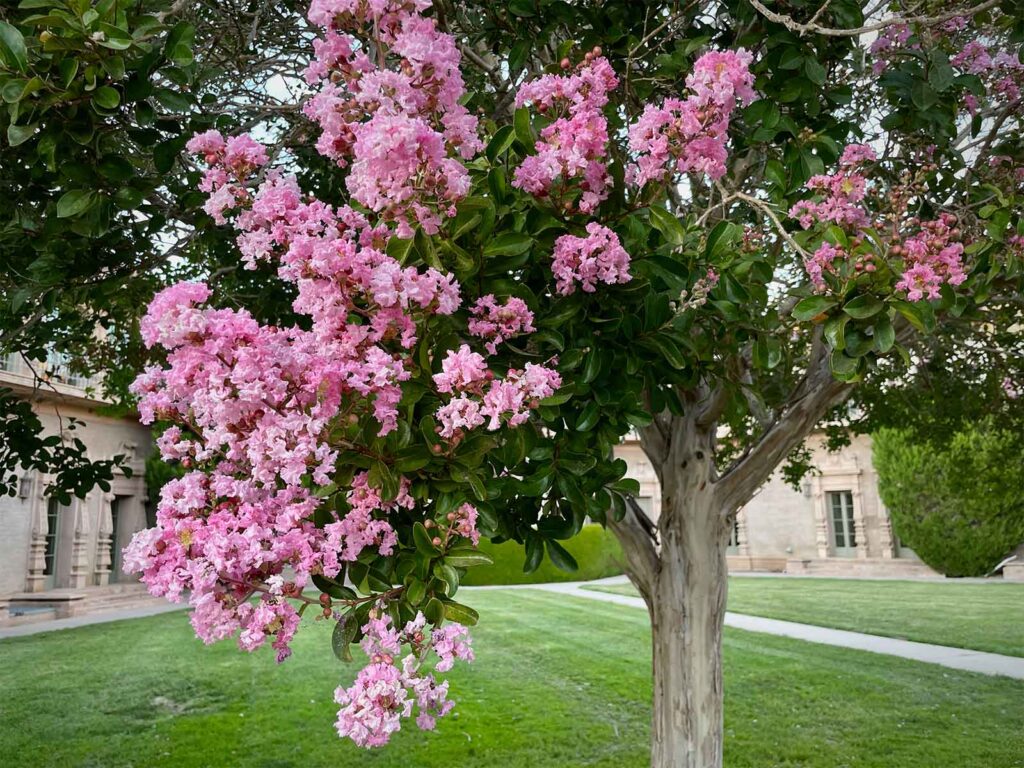
If you want seasonal colour and you’re weighing up deciduous trees with non-invasive roots, Crepe Myrtle is the most reliable choice for SEQ conditions.
It drops its leaves in winter, which some people see as a drawback and others appreciate for the winter light it lets through. Come summer it flowers hard in pinks, reds, purples, and whites.
It also:
- Grows to around 6-8 metres
- Handles heat and drought well once established
- Has a root system that is shallow and contained.
It’s been a Gold Coast garden staple for decades – for good reason.
Other deciduous picks:
- Ornamental Pear (Pyrus calleryana): Good autumn colour, adaptable to most soils.
- Japanese Maple: Compact, stunning foliage, suits a sheltered courtyard position.
A quick note on fruit trees
For anyone wanting productivity alongside safety, dwarf fruit trees with non invasive roots are a practical option for suburban blocks. Dwarf apples, citrus varieties, and feijoas all have contained root systems that pose little risk to nearby structures. They’re not shade trees, but they earn their space.
Bonus Read: The 6 Most Invasive Tree Root Species
Already have a tree causing concern?
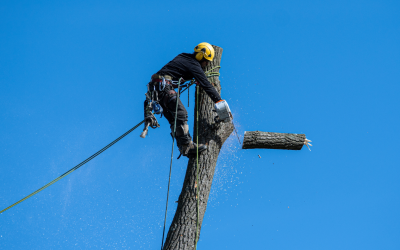
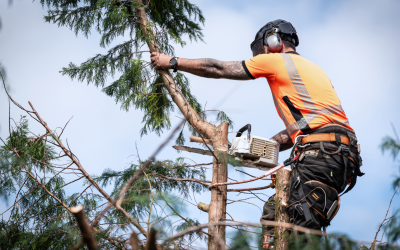
Sometimes the tree was planted before anyone thought to ask these questions. So if you’ve got roots pushing into pipes or lifting paving, or a tree that’s simply outgrown its spot, JC Tree Services can assess the situation and give you an honest answer on what to do next.
Get in touch for a free quote.