Ask pretty much any arborist which plant generates the most desperate phone calls, and bamboo will be near the top of the list every time. And they’re not asking us about the plant – they’re asking us how to kill bamboo roots before the whole situation gets any further out of hand.
It’s not that people hate bamboo exactly – because plenty of us plant it deliberately for the screening privacy or the look of it. It’s just that running bamboo varieties have a habit of turning a tidy garden feature into something that creeps under fences, or pops up in the neighbour’s yard – or cracks through paving. By the time someone actually reaches out to us, the bamboo’s usually well beyond a quick weekend fix, and the frustration in their voice tends to say as much.
Why it’s so hard to actually get rid of
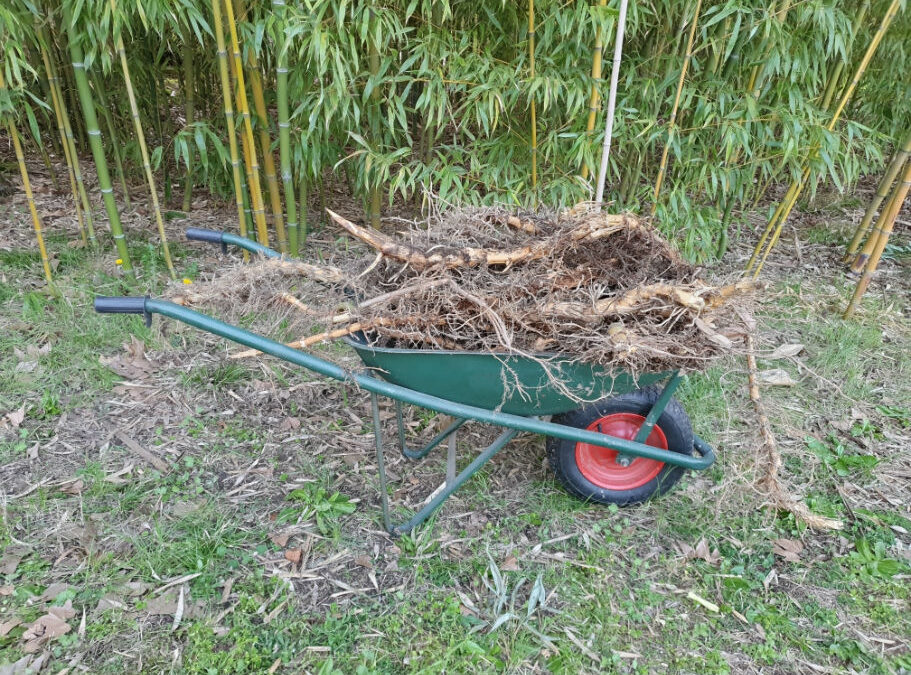
Running bamboo spreads through a dense underground network of rhizomes, and those rhizomes are what make it so stubborn. Cut the visible stalks down, and the roots underneath are often still very much alive, ready to send up new shoots the moment they get the chance.
Some established rhizome systems can extend several metres from where the original plant went in, quietly working their way under paths, fences and garden beds long before anyone notices anything above ground. That’s the part most people don’t realise going in, and it’s also why so many DIY attempts end up being repeated year after year instead of solving the problem once and for all.
The methods – And what actually works
Some of these really do work … while others are worth knowing about mainly so you can skip them! Read through, and we’ll give you the lowdown.
1. Systemic herbicide injection
Rather than spraying leaves and hoping for the best, injecting a systemic herbicide directly into freshly cut stalks lets the chemical travel down into the rhizome network itself, which is the only part of the plant that actually matters.
It’s one of the more reliable ways of tackling how to kill bamboo roots without digging up half the yard in the process, since the herbicide does the work underground while you stay above it.
2. Cutting and starving
Looking to learn how to kill bamboo roots naturally? Repeatedly cutting new shoots back to the ground – every single time they appear – gradually exhausts the energy reserves stored in the rhizomes.
Sure, it’s slow, and it takes real consistency over a full growing season or two – and missing even a few cycles can undo months of progress. But for smaller or younger patches it’s actually a workable, low-cost approach.
3. The vinegar method
Plenty of people ask us about how to kill bamboo roots with vinegar – so here’s the honest answer:
Household vinegar simply isn’t strong enough to do the job. It can scorch a few leaves on contact, but the acetic acid in standard kitchen vinegar simply can’t penetrate down into an established rhizome system sitting well below the surface.
So while it’s an appealing idea because it feels safe and natural, on anything other than a very young shoot, it’s really just a temporary cosmetic effect rather than an actual solution.
4. Boiling water
Exposing a section of root and pouring boiling water directly onto it can actually damage nearby rhizomes through the intense heat. But it comes with real limitations, too.
First, you’d need a large volume of boiling water to affect anything beyond a small area, and there’s no reliable way to confirm every runner’s actually been reached before you backfill the soil.
5. Complete excavation
If you want to understand how to kill bamboo roots permanently, this is really the only method that guarantees it.
Digging out the entire rhizome network – every single fragment included – physically removes the plant’s ability to regrow at all. It’s labour-intensive and genuinely hard work, but it’s the one approach that doesn’t rely on chemicals working their way through the system or hoping nothing was missed.
6. Root barriers
Installing a solid barrier well below ground level won’t kill existing bamboo, but it will stop rhizomes spreading any further into neighbouring garden beds or a fence line. It’s often used alongside one of the killing methods above, containing the problem while the actual removal work happens, and it’s especially worth considering if a neighbouring property is involved. Because who wants to be explaining a spreading root system across a boundary fence?
How an arborist handles it differently
A lot of where a DIY attempt falls short is in not knowing exactly how far the rhizome network actually extends before starting, which means missed fragments and bamboo returning within a season.
An experienced arborist:
- Maps the extent of the root system first
- Selects the right combination of herbicide and excavation for the specific situation
- Handles application safely around nearby trees, structures and garden beds you want left untouched.
It’s also considerably faster, since professional equipment makes light work of what would otherwise be days of manual digging. It also avoids the trial-and-error most homeowners go through learning how to kill bamboo plants and roots the hard way, often after already sinking a season or two into a method that was never going to fully work.
Dealing with an established patch?
Little interest in learning how to kill off bamboo roots and just want a professional to do it for you? If it’s taken hold at your place and DIY methods aren’t cutting it, JC Tree Services can assess the extent of the root system and remove it properly, drawing on the same equipment and experience used across Gold Coast properties every week, so it actually stays gone.
Call JC Tree Services or get your free quote today.